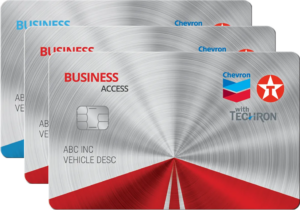
A practical fuel-management tool for any company that fuels vehicles, offering stronger payment control, transaction visibility, reporting, security, and potential savings.
Fuel cards can offer small business owners a powerful tool for managing fuel expenses. Whether you’re looking for more reporting, more spending control, or more security, a fuel card can be a strong start toward an efficient business fuel program.
A business fuel card also functions as a fuel-management and payment tool, and can give your company account-level visibility into driver spending, fuel transactions, and fuel costs across vehicles and locations.
A business fuel card can help managers monitor fuel usage, compare transactions by driver or vehicle, review fuel volume and identify spending trends across the fleet.
The Problem With Receipts, Reimbursements and Manual Expense Tracking
Many small businesses require vehicles to get the job done. No matter if it’s two vehicles or a larger fleet, those vehicles need fuel, and every fuel purchase eventually has to be tracked, reviewed, and reconciled.
When drivers pay with a personal card, cash, or a general company credit card, the business often has to manage reimbursements, paper receipts, and manual expense tracking. That creates extra work for accounting teams and fleet managers because fuel purchases must be matched to a driver, vehicle, location, transaction amount, and statement period. Records also matter at tax time. IRS Publication 463 states that a business deducting vehicle expenses must be able to prove the amount, time, place, and business purpose of the expense, and that those records should be kept at or near the time of the expense.¹
But what happens if a driver loses a receipt? Or what if the amount spent does not add up to the amount of fuel purchased? There are multiple ways an ordinary company credit card can leave business owners in the dark.
This is where a business fuel card comes in handy.
How a Business Fuel Card Supports Fuel Management
Fuel management is more than paying at the pump. A business fuel card can help managers monitor fuel usage, compare transactions by driver or vehicle, review fuel volume, and identify spending trends across the fleet.
With better data, a company can inform route planning, set practical card limits, and spot unusual activity earlier. Unusual activity is a reason to check, not proof of misuse: the U.S. Environmental Protection Agency notes that real-world fuel economy varies with driving style, speed, idling, vehicle load, maintenance, terrain, and weather, so fuel use can differ from expectations for ordinary reasons.² That can make the card part of the business’s operating process, not just another payment method.
Where Business Fuel Cards Can Be Used
Acceptance matters because drivers need convenient access to fuel stations on their regular routes. Fuel is sold widely: NACS reports that 122,620 of the 151,975 convenience stores in the United States sold motor fuel as of December 31, 2025, but an individual card’s accepted network can be much narrower than that.³ Before choosing a card, compare the card’s acceptance network, available Chevron and Texaco locations, and whether the program supports the gasoline or diesel purchases your vehicles need.
A good fit should make fueling convenient while still giving the business the control and reporting it expects. If your drivers regularly fuel near Chevron and Texaco stations, a branded business fuel card can pair everyday fueling with program benefits, reporting, and savings opportunities.
The Business Fuel Card Solution for Small Businesses
The right business fuel card can be a practical advantage for a growing company. When you compare a business fuel card to a typical bank-issued credit card, three differences often stand out: more detailed spending visibility, additional security controls, and automatic reporting.
More Spending Visibility: With a business fuel card, the driver is prompted to enter their unique Driver ID number and the odometer reading of their vehicle. You can see who purchased fuel, where and when they did it, the transaction amount, and how the card was used. Each transaction can give the account owner a clearer view of driver spending, purchase location, fuel volume, odometer reading, and vehicle usage. That transaction data can support dashboards, reports, and analytics that can make it easier to monitor your fuel program over time.
Improved Security: Personalized Driver ID numbers offer one layer of security for business fuel cards, but that is just the beginning. Some card programs can automatically alert business owners of potential spending issues or decline issues at the pump. Card controls can also help reduce payment risk by limiting purchases to approved categories, setting spending rules for employees, and flagging activity that looks inconsistent with normal fueling patterns. Payment risk is not hypothetical: in its 2026 Payments Fraud and Control Survey, the Association for Financial Professionals reported that 76% of U.S. organizations experienced attempted or actual payments fraud in 2025 across all payment types.⁴ These purchase controls can help protect the business from misuse while still giving drivers the flexibility they need on the road.
Payment risk is not hypothetical: in its 2026 Payments Fraud and Control Survey, the Association for Financial Professionals reported that 76% of U.S. organizations experienced attempted or actual payments fraud in 2025 across all payment types.
Automatic Reporting: A business fuel card can reduce fuel expense paperwork. Reports are automatically created to let you know where and how your cards are being used. That can mean less time chasing paper receipts. Automatic reporting can reduce manual paperwork by organizing fuel purchases in one account view. Depending on the card program, managers may be able to review statements, monitor driver activity, track fuel expenses by vehicle, and use reporting dashboards to support expense management during each billing cycle.
Savings, Rebates, and Fuel Discounts
Most business fuel cards are connected to a specific fuel brand and offer more ways to save when you fuel at branded stations. This can be a real money saver if your drivers work in an area with many of the same brand stations. How much a program helps also depends on local pricing: the U.S. Energy Information Administration publishes retail gasoline and diesel prices weekly and reports them by region and by state, and those prices change from week to week.⁵ Savings can come from more than one place. A business fuel card may help reduce fuel costs through rebates or fuel discounts, while also helping the company control unauthorized purchases and reduce time spent on receipt collection. Rebate and discount terms vary by card product and by purchase volume, and not every card earns a rebate, so compare the programs before you apply. Together, those benefits can improve cash flow and give business owners a clearer view of the value they receive from the program. The Chevron and Texaco Business Card Program is a strong option for small businesses that want fuel savings, spending controls, reporting, and support from a recognized fuel brand.
Choosing the Right Business Fuel Card for Your Fleet
The right card choice depends on your business needs: fleet size, driver routes, preferred fueling locations, reporting requirements, payment terms, available controls, and any fees associated with the account.
Comparing card types before you apply can help you choose the product that fits your operations instead of forcing your team into a one-size-fits-all program.
Review the Chevron portfolio of fuel card options to select the card best designed for your business fueling. If your team needs help with the application process, account questions, or a lost or stolen card, the Chevron and Texaco Business Card support team can point you to the right next step.
¹Internal Revenue Service, Publication 463 (2025), “Travel, Gift, and Car Expenses,” ch. 5 (Recordkeeping), https://www.irs.gov/publications/p463
²U.S. Environmental Protection Agency, “Your Mileage May Vary,” Green Vehicle Guide, https://www.epa.gov/greenvehicles/your-mileage-may-vary
³ NACS, “U.S. Convenience Store Count,” 2026 NACS/NIQ TDLinx Convenience Industry Store Count (data as of Dec. 31, 2025), https://www.convenience.org/Research/Convenience-Store-Fast-Facts-and-Stats/FactSheets/IndustryStoreCount
⁴Association for Financial Professionals, “Over 75% of US Firms Experienced Payments Fraud in 2025, While AI Adoption for Fraud Mitigation Lags,” Apr. 14, 2026 (2026 AFP Payments Fraud and Control Survey Report), https://www.financialprofessionals.org/about/learn-more/press-releases/Details/over-75-percent-of-us-firms-experienced-payments-fraud-in-2025-while-ai-adoption-for-fraud-mitigation-lags
⁵U.S. Energy Information Administration, “Gasoline and Diesel Fuel Update,” weekly retail price series by region, PADD and state, https://www.eia.gov/petroleum/gasdiesel/